
• There are no suggestions because the search field is empty.

Aiming for zero accidents: safety is a shared responsibility across the Sarlin organisation

When a company goes four years without an accident leading to absence, luck isn’t part of the equation. Safety is at the heart of the Sarlin strategy, and all our staff are committed to it.

Our ambition is to keep the accident rate at zero also in the future. To this end, we have made safety a common concern for the entire organisation.

“Whether you’re in the field or in the office, everyone is responsible for maintaining safety and building the safety culture. I take my hat off to all our employees for their responsible attitude towards safety.” - Jiri Viholainen, Sarlin CEO.


Kaasu&energia2024-CHP-kaasumoottorilaitos-Blominmäki-89

Safety culture grows from everyday action

In industrial environments, safety is governed by a range of protocols. Laws, regulations and agreements set the standards, but it’s the everyday culture that defines the level of safety achieved.

“Precise work instructions, proactive safety thinking and systematic risk management form the cornerstone of our operations. When we know where hazards can occur, we can take action to avoid them,” says Ari-Juha Mäkinen, Occupational Safety Manager at Sarlin.

At Sarlin, safety work starts from the moment an employee first sets foot in the premises; every employee must complete a safety orientation. Furthermore, each manager undergoes safety training.

Regular training, statutory qualifications and client-specific inductions ensure that safety skills are kept up to date. Risk and hazard assessments are updated on a regular basis, especially in maintenance.

Open communication lays the foundation for all development.

"We regularly address safety together, for example in toolbox talks, staff briefings and annual company-wide safety days.

It feels natural to maintain the safety culture thanks to our user-friendly reporting tool and indicators visible to everyone,” says Eija Halonen, Quality Manager at Sarlin.

Konttori2023-6

The pillars of Sarlin’s safety work

  • Safety targets and indicators are communicated transparently and revisited in staff briefings every three weeks.
  • All staff members complete a safety orientation, and managers undergo a safety training.
  • All safety incidents are recorded and investigated so that we can learn from them.
  • The staff is encouraged to make safety observations and rewarded for doing so.

Safety is an absolute prerequisite in customer work

Our experts work in demanding industrial environments where the handling of gases, for example, requires extremely precise practices.

On every client site, it is essential to ensure seamless cooperation between management, staff and other actors. Systematic planning and training ensure that everyone shares a clear understanding of the schedules, protective equipment requirements, and safety instructions on the client’s premises. Working in pairs is also an absolute requirement on many of our sites.

We expect our suppliers to commit to safety the same way as we do, and we support them in doing so. Safety is not a competition, but a shared objective that we actively improve on together.

“We uphold a top-tier safety culture and expect the same from others. Customer requirements alone set the bar high: safety indicators must be at an excellent level for us to even be allowed on customer premises,” Mäkinen remarks.

Sarlin’s security principles for partners:

  • We review site-specific safety requirements in advance.
  • We expect all our partners to commit to high safety standards.
  • We actively report all safety observations and speak up if we notice any shortcomings.
 

Kaasu&energia2024-CHP-kaasumoottorilaitos-Blominmäki (90)


Case: Intelligent gas detector safeguards lone work

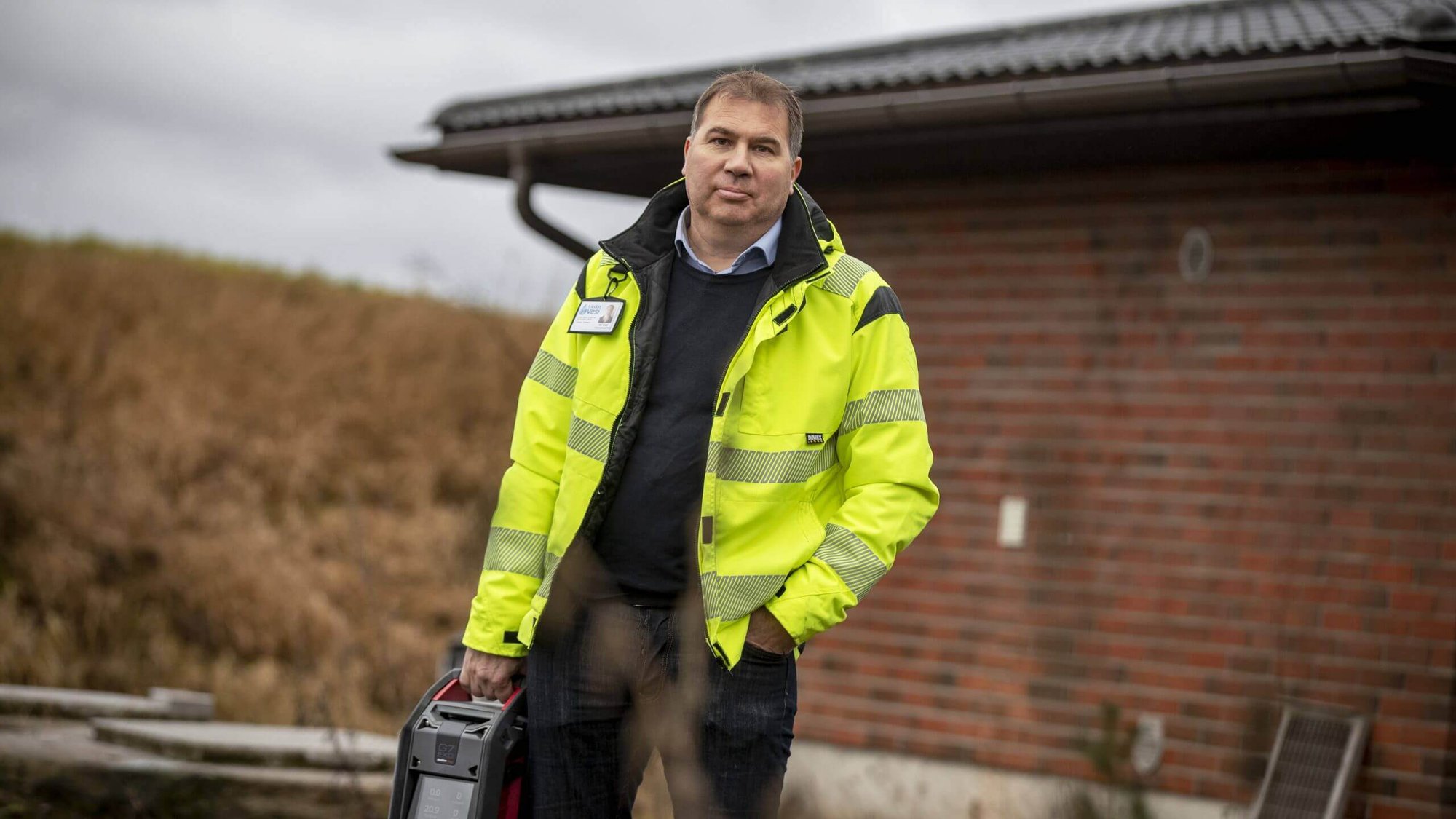
We actively adopt new solutions that improve the way we work under challenging circumstances. An example of this is the Blackline Safety gas detector, whose next generation technology offers new possibilities for working with gases.

The multi-gas detector monitors worker safety and automatically calls for help in the event of a gas exposure or a fall, for example. What’s more, it also transmits the worker’s precise location. The real-time alarm enables safe work on sites where lone work previously carried more risk.

Attitude matters, and open discussion is in everyone’s interest

 What if, despite everything, a near miss occurs or a clear safety risk is identified? The workplace atmosphere must allow for open discussion and observation. 

 Ensuring safety is caring. Pointing out a safety shortcoming may prevent a serious accident. Failing to speak up about an observed hazard is much worse,” Mäkinen explains.

 Any accidents are thoroughly investigated and dealt with immediately. Incidents are communicated anonymously in staff briefings to prevent similar situations in the future.  

 “Attitude and compliance with instructions are what matter the most,” Mäkinen underlines. “Our guidelines are designed with the aim of preventing hazardous situations. If you don’t follow the instructions, things will get difficult.”

Common rules are easy to adopt because, in the end, everyone’s own health and safety are at stake.

 “When it comes to safety, we need the courage to address any elephants in the room. This not only promotes everyone’s safety but also improves work efficiency,” says Mäkinen.

Tomorrow’s safety is made today

Safety work evolves with the times, and new technologies come with new lessons to learn.

 Hydrogen presents an interesting opportunity. We have worked with gases for decades, but from a safety perspective, hydrogen is in a world of its own,” says Mäkinen.

 In the grand scheme of things, the very concept of safety has broadened. Physical safety is now accompanied by mental and digital safety.

 “Today, safety means that our experts can fully concentrate on their work without constant concern about risks – whether they relate to physical hazards or information security,” Viholainen sums up.

Summary – the conditions for a safe working environment:

  • The whole organisation takes ownership.
  • Targets and indicators are clear for everyone.
  • The staff are rewarded for safety observations and improvement ideas.
  • Continuous improvement is vital: observations should lead to improved practices and processes.