• There are no suggestions because the search field is empty.

HSEQ audit deepens partnerships

Strong partnerships are built on trust, shared values and sustainable business. For us at Sarlin, this means the ability to tangibly demonstrate responsibility, safety and quality.

The HSEQ audit by an external auditor clearly indicates that we are a reliable partner that constantly improves its performance and not only meets, but exceeds expectations.

In the 2025 HSEQ audit, we achieved an even higher score than before, which reflects our commitment to the targets we have set together.

How does the HSEQ audit bolster partnerships, and what makes the third-party audit integral for meaningful collaboration? In this article, you will find out.

Konttori2024-32

HSEQ audits reliably measure the maturity and performance of a company

The HSEQ audit is a client-driven supplier assessment that measures the company in four areas:

  • Health
  • Safety
  • Environment
  • Quality

An extensive questionnaire is completed in advance, followed by an on-site audit – a comprehensive discussion session in which an independent auditor reviews the company’s operations with client representatives. The process is interactive and instructive, not just a box-ticking exercise.

The audit is carried out by an independent auditor together with client company representatives.

 Sarlin’s results from the 2025 HSEQ audit:

  • 619 points out of a 750 maximum (excellent rating starts at 450).
  • The average of all audited companies is 394 points.
  • The assessment found no operational deviations. 

The score is well above the industry average and shows continued progress compared to the 2022 result, which was already excellent. The audit confirms that the previously identified areas for development have been addressed and that we have further improved our practices.

The process confirmed that Sarlin has made the right choices in HSEQ development. It also provided new perspectives for further improvement.

To ensure the objectivity and impartiality of the process, the audit was carried out by an independent external auditor, Kiwa Certification. Kiwa acted as the main assessor during the audit and prepared the final report on the findings.

Juha Karlsson, Lead Auditor at Kiwa Inspecta, explains the unique nature of the process: 

“What makes the HSEQ audit different from a conventional buyer-seller audit is its impartiality and third-party perspective.  The discussion-based nature of the session provides added value. Companies get comparable results and see where they stand in their industry.”  
sarlin hseq

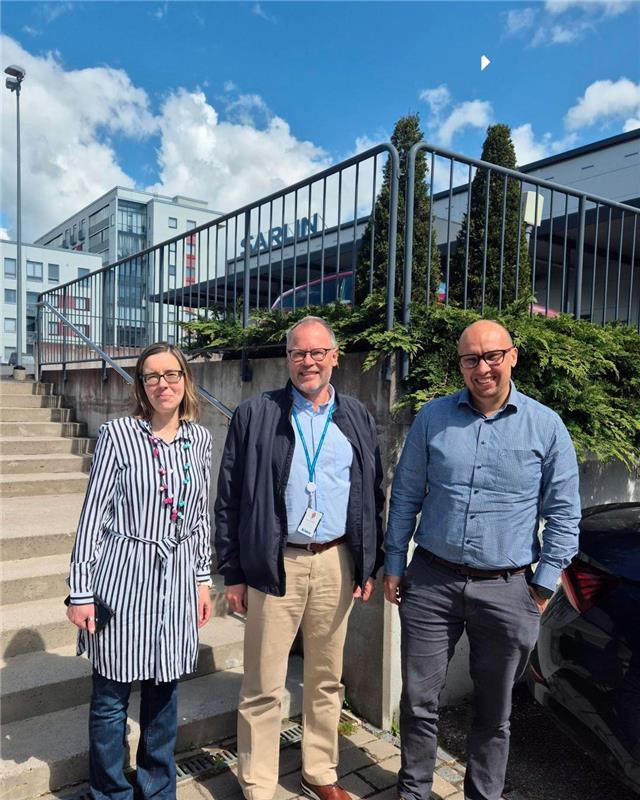
From left to right: Eija Halonen, Juha Karlsson and Jiri Viholainen.

HSEQ Cluster

The HSEQ cluster is a network of 19 large industrial companies working together to ensure that suppliers commit to a common set of rules. The Cluster companies are committed to a high-standard safety culture, environmental responsibility and continuous quality improvement.

Instead of each company evaluating suppliers individually, the Cluster has developed a shared audit procedure. The unified audit serves all Cluster companies, as it significantly increases the efficiency of the process.

Read more about HSEQ audit at hseq.fi.

Interaction deepens partnerships more than just reporting

Conventional supplier audits often focus only on verifying compliance with requirements.

The advantage of the HSEQ Cluster’s model is genuine dialogue where partners can share best practices and develop operations together.

The Cluster companies represent a wide range of industries, which provides valuable perspectives.

“When major players come together for a common agenda, the potential for interaction and development is multiplied.  The aim is not to point out shortcomings, but to find and develop solutions,” says Jiri Viholainen, Sarlin CEO.

Eija Halonen, Quality Manager at Sarlin, highlights the importance of face-to-face meetings:

“The audit provides an excellent opportunity for dialogue between us and the Cluster companies. A face-to-face meeting is quite different from filing a form. It sparks open discussion and sparring.”

The process is not a one-way check, but a developmental discussion in which all parties learn.

“The Cluster’s particular advantage is that the client companies do not simply set expectations for us, but they seek insights into how their own activities could enable our development in line with the HSEQ goals,” Viholainen explains.

This two-way learning makes the HSEQ process unique. Rather than being a simple approval or rejection decision, the audit lays the foundation for long-term partnership and joint development.

Systematic development delivers results

Sarlin’s success in the HSEQ audit is based on long-term work and staff commitment. HSEQ issues are not only on the management’s agenda or an individual supervisor’s work list, but the entire personnel is involved in developing them.

“The whole organisation sees the HSEQ as an opportunity. Measures are prepared based on development areas and entered into a monitoring tool to ensure they are taken into account in day-to-day work,” says Halonen.

The audit positively highlighted areas where Sarlin has invested across the organisation:

  • Leadership and strategy: The management’s excellent attitude towards HSEQ development, staff involvement in strategy work between 2025 and 2027, various annual cycles to guide operations.
  • Skills and development: Significant product development effort, training and skills registers maintained by HR. 
  • Partnership management: Improvement in supplier and subcontractor management, adequate attention to accountability matters.

"The can-do attitude is evident in many development projects, and the management sets an example of how to invest in sustainability” - Eija Halonen, Quality Manager.

When development themes are integrated into the strategy, they are not pushed aside by other activities

Sarlin’s success in HSEQ is not a coincidence – it is the result of strategic policies.

The availability of skilled staff is crucial for both Sarlin and its clients.

Sustainability and good governance are highlighted in client discussions, and they have a direct impact on business reliability.

Moreover, sustainability does not end with our organisation, but we have a duty ensure that our partners also act sustainably. Documentation, communication and interaction are essential parts of this process. Through them, we build trust with our stakeholders. 

On the other hand, shared environmental concerns are reflected in the fact that our client companies are allocating an increasing amount of resources to sustainability.

Environmental responsibility is a clear trend, and we are expected to demonstrate strong commitment to it also in the future. As Viholainen puts it:

“Environmental and social challenges drive the investments of our client companies. Many discussions clearly highlight accountability and good governance.”

Karlsson from Kiwa Inspecta agrees, stressing that responsibility is already a basic assumption in business.

“The impact of regulation and requirements is particularly significant on large companies, which have to demonstrate sustainability throughout the supply chain. In turn, the supply chain extends the impact to smaller companies. Compliance is no longer voluntary, but a concrete prerequisite for business operations.”

The HSEQ audit is, above all, a tool for building trust, deepening partnerships and developing operations together.


Contact us

-profile-picture

Eija Halonen

Quality manager

010 550 4210
-profile-picture

Jiri Viholainen

CEO

010 5504232